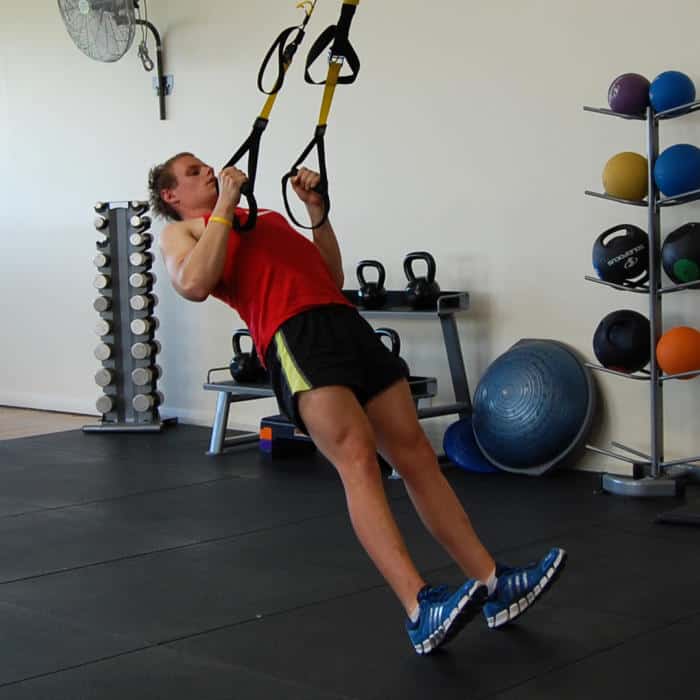
Chest, shoulders and abs get all the mirror-muscle attention, but a weak back catches up with you eventually: poor posture, nagging pain, and a ceiling on every pulling movement you try to build. These are the best lat exercises you can do at home, no lat pulldown machine required, using nothing but a TRX Home2 Suspension Trainer.
What Are the Lats and What Do They Do?
The latissimus dorsi, your “lats,” are the large, wing-shaped muscles running from your lower back and ribcage up to your upper arm. They’re doing more work than most people realise:
- Pulling your arm down and in (the main action in every row and pull-up)
- Extending your arm behind you (swimming, throwing, reaching back)
- Pulling your shoulder blades toward your spine
- Stabilising your spine under load
- Assisting your breathing during hard efforts
Training them properly improves posture, reduces back pain, builds real pulling strength, and is the main driver behind the V-taper look everyone associates with a strong back.
TRX Lat Exercises

| Exercise | Difficulty | Targets | Cue |
|---|---|---|---|
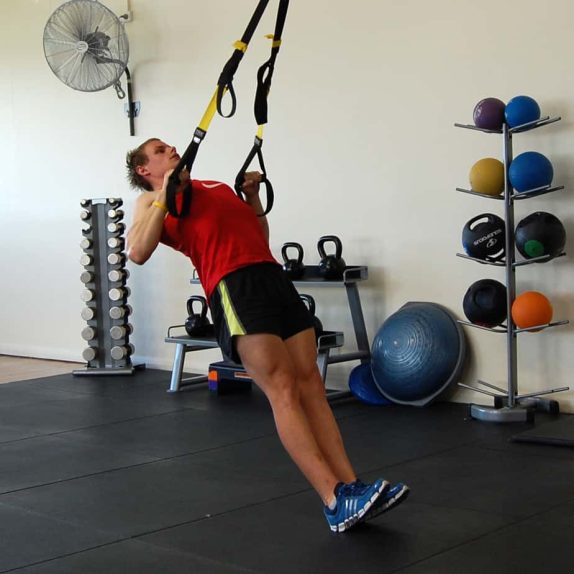
| TRX Row | Beginner | Lats, back, core | The foundational lat-building movement. Full guide: TRX Row. |
| TRX Single-Arm Row | Intermediate | Lats, obliques, core | One side at a time, forcing your core to resist rotation while your lat does the pulling. Full guide: TRX Single-Arm Row. |
| TRX Squat Row | Intermediate | Lats, legs, full body | Combines a squat with a row for a genuinely full-body lat movement. Full guide: TRX Squat Row. |
| TRX Pull-Up | Advanced | Lats (highest activation of any pulling exercise) | The gold standard for lat development, using the straps for assistance as needed. Full guide: TRX Pull-Up. |
| TRX Swimmer’s Pull | Intermediate | Shoulders, back, core | A functional pulling pattern that trains your lats through a full range without loading your elbows. Full guide: TRX Swimmer’s Pull. |
| TRX Face Pull | Beginner-Int. | Rear delts, upper back, posture | Not a pure lat exercise, but essential for balanced back development and shoulder health. Full guide: TRX Face Pull. |
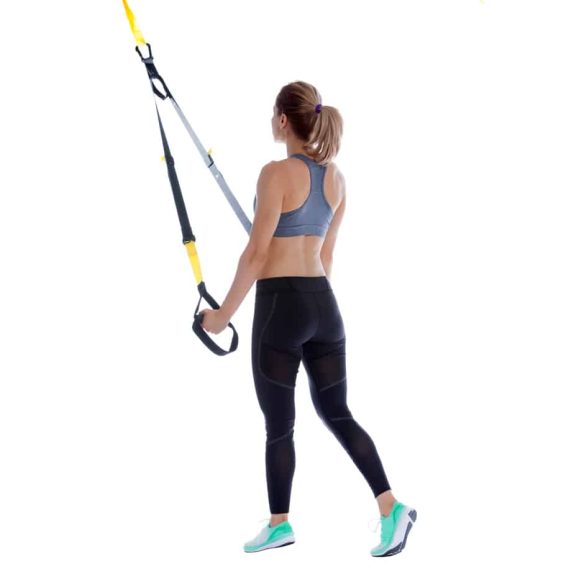
A push-up trains your lats too. During the lowering phase of a push-up, actively trying to pull your hands apart and rotate your elbows in engages your lats to stabilise your shoulders. It’s a small cue, but it turns a chest exercise into a genuine lat activator as well.
Full-Gym Lat Exercises
If you also train at a full gym, here’s how the same lat-focused session looks with barbells, dumbbells and cables.
| Exercise | Targets | Cue |
|---|---|---|
| Deadlift | Lats, hamstrings, glutes, entire back | Hinge at the hips, keep the bar close, drive through your heels to stand. |
| Barbell Row | Upper back, lats | Hinge forward, pull the bar to your lower ribcage without swinging your hips. |
| Lat Pulldown | Lats (isolated) | Pull with your back, not your arms. Vary your grip width to shift the emphasis. |
| Dumbbell Row | Lats, back | One hand on a bench, lead with your elbow, pull the dumbbell to your ribcage. |
| Landmine Row | Lats | Anchoring the barbell reduces momentum, letting you focus purely on squeezing your lats. |
| Negative Pull-Up | Lats, chest, arms | Jump to the top position, then lower yourself as slowly as possible, 3-5 seconds down. |
Two Lat Workouts
TRX Lat Workout (Home)
| Exercise | Reps | Rest |
|---|---|---|
| TRX Row | 3 sets x 12 | 45 sec |
| TRX Single-Arm Row | 3 sets x 10 per side | 45 sec |
| TRX Squat Row | 2 sets x 12 | 45 sec |
| TRX Swimmer’s Pull | 2 sets x 12 | 45 sec |
| TRX Pull-Up (or assisted) | 2 sets to near-failure | 60 sec |
Full-Gym Lat Workout
| Exercise | Reps | Rest |
|---|---|---|
| Deadlift | 4 sets x 6 | 2-3 min |
| Barbell Row | 3 sets x 10 | 90 sec |
| Lat Pulldown | 3 sets x 10 | 90 sec |
| Landmine Row | 3 sets x 10 | 60 sec |
| Negative Pull-Up | 2 sets x 5 | 90 sec |
For either workout, warm up your shoulders and upper back first, and aim to train your lats at least twice a week for real, visible progress.
Common Mistakes to Avoid
- Pulling with your arms first instead of initiating with your shoulder blades and lats
- Skipping face pulls and rear-delt work, leaving your back development lopsided
- Rushing pull-ups and rows instead of controlling the lowering phase, where a lot of the lat-building actually happens
- Training lats once a week or less, not enough frequency to drive real change
Getting Set Up
Every TRX lat exercise on this list needs only a TRX Home2 Suspension Trainer and an anchor point. No ceiling beam? A Workout Door Anchor or Wall Mount Bracket sets you up in any room.
New to suspension training? Start with The Best TRX Exercises for Beginners. Want the rest of your pull day covered too? See TRX Row: The Best Pull Exercises for a Stronger Back, or The 20 Best TRX Exercises for a Full-Body Workout for push, legs and core.
Final Thoughts
Strong lats aren’t just for the mirror. They stabilise your spine, protect your shoulders, and quietly hold up every pulling movement you’ll ever do. Work through these lat exercises at home two to three times a week with a TRX Suspension Trainer, and you’ll build the back strength that everything else in your training depends on.
Ready to train your back at home? Shop the TRX Home2 Suspension Trainer or browse the full TRX Exercise Library for more moves.